
As society continues to grasp the importance of sustainability, art becomes an influential medium to convey this critical message. In this article, we'll explore sustainable art in its many forms and look at how art and sustainability can merge to create beautiful, thought-provoking, and socially impactful works.
We'll look at artists around the world who are using their creative talents to promote conservation, enhance urban spaces, and advocate for environmental change. These creatives are putting the environment at the heart of their work, challenging us to see the world in new ways and inspiring us to take action.
Table of Contents
- What is Sustainable Art?
- The History of Sustainable Art
- What Does Sustainability Mean in Art?
- The Environmental Impact of Sustainable Art
- Social Benefits of Sustainable Art
- The Different Types of Sustainable Art with Examples
- Renewable Energy Art
- Upcycled Art
- The Use of Natural Materials in Art
- Ecological Art
- Conceptual Art
- Eco-Decorative Art
- Sustainable Community Art Projects
- Emerging Trends and The Future of Sustainable Art
- Augmented and Virtual Reality in Sustainable Art
- Artificial Intelligence in Art Creation
- Biodegradable and Sustainable Materials in Art
- Blockchain Technology and Digital Art
- Final Thoughts
What is Sustainable Art?
Sustainable art involves the use of eco-friendly materials and practices, with the aim of reducing the environmental impact of art creation. But it's not just about the materials used; it's also about the message it conveys as sustainability itself has become a significant topic for artists.
Many sustainable artists use their work to raise awareness about environmental issues and promote a more sustainable way of life. They test the traditional notions of what art is and what it can be, pushing the boundaries and exploring new possibilities for sustainability in art.
They show us that art can be more than just a form of expression; it can also be a tool for change, a catalyst for action, and a beacon of hope for a greener future.
The History of Sustainable Art
Sustainable art has a rich historical context and has evolved over the years with the contributions of key artists from different generations and movements. Early artists have been using natural materials and promoting sustainability for centuries. However, in recent years, as awareness about environmental issues continues to grow in the art world, so too does the popularity of sustainable art.
Today, this sustainable art movement is thriving, with artists around the world creating stunning pieces that are as eco-friendly as they are beautiful. Key artists and movements that have significantly contributed to the development of sustainable art include:


Joseph Beuys
German artist Joseph Beuys is often considered a pioneer of ecological art. He used unconventional materials such as felt, animal fat, and organic substances in his artworks, emphasizing the interconnectedness of art, nature, and society. One of his most renowned projects is '7000 Oaks'. Initiated at the Documenta 7 in 1982, the project involved the planting of 7000 oak trees in Kassel, Germany, each paired with a basalt stone. The project, which took five years to complete, was a monumental gesture of urban renewal and a symbol of the potential for positive environmental change.


Agnes Denes
Denes, a lifelong environmentalist, is known for her land art installations that engage with environmental themes. Her work "Wheatfield - A Confrontation" (1982) involved planting and harvesting a wheatfield on an empty lot in downtown Manhattan, drawing attention to issues of food production and urban development. Another significant work of hers is "The Living Pyramid" (2015), a large-scale pyramid constructed from soil and planted with thousands of wildflower seeds. Located in Queens, New York, the pyramid gradually bloomed into a vibrant display of life, symbolizing growth, renewal, and the potential for environmental rejuvenation in urban spaces.
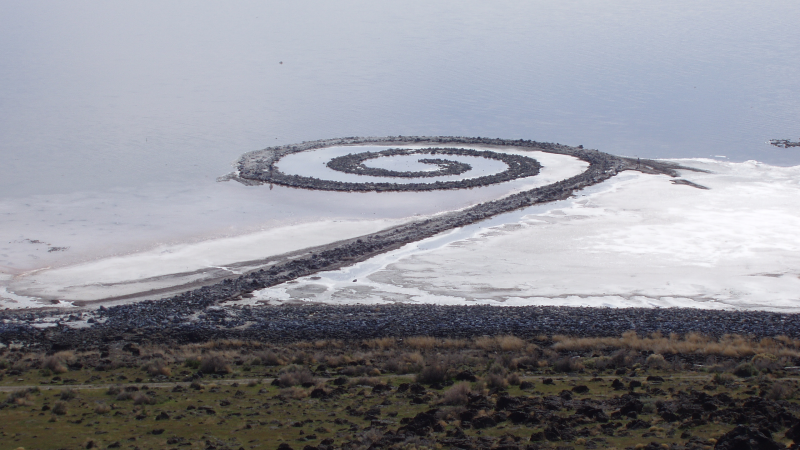

The Land Art Movement
In the late 1960s and 1970s, land art emerged as a radical departure from traditional art spaces. Artists like Robert Smithson, Nancy Holt, and Michael Heizer created large-scale artworks in natural landscapes, using earth and natural materials as their mediums.For instance, Robert Smithson's "Spiral Jetty" is a majestic spiral made of rocks and dirt extending into the Great Salt Lake in Utah. Meanwhile, Nancy Holt's "Sun Tunnels" consists of four large concrete tubes located in the Utah desert, ingeniously arranged to align with the sun during the summer and winter solstices. Both these works of art underscore the captivating beauty of nature while emphasizing the importance of sustainability.

Andy Goldsworthy
The British artist, Andy Goldsworthy is renowned for his site-specific installations and sculptures created from found materials in nature. His ephemeral works often highlight the transient nature of life and the relationship between humans and the environment. One of his notable works is the 'Storm King Wall' project. Located at the Storm King Art Center in New York, Goldsworthy constructed a serpentine stone wall that weaves through trees, across a pond, and into the landscape beyond. The wall, built in 1997-1998, is a testament to Goldsworthy's ability to integrate his art into the natural environment in a harmonious and visually striking manner.


Christo and Jeanne-Claude
This artistic duo is known for their large-scale environmental installations, like "The Gates" in Central Park. Their work highlights natural beauty and promotes unique interactions with surroundings. A key project, "The Floating Piers" on Italy's Lake Iseo, involved a 3-kilometer walkway made from shimmering fabric and floating docks, connecting Sulzano to Monte Isola and San Paolo. This 16-day, free public exhibition in 2016 offered a unique 'walking on water' experience, demonstrating their commitment to environmental responsibility through full post-exhibition recycling.
These pioneers paved the way for a broader acceptance and understanding of sustainable art as a form of creative expression transcending traditional boundaries. Their contributions have influenced contemporary artists to explore sustainability in their work and use art as a platform for environmental advocacy and awareness.
What Does Sustainability Mean in Art?
Art has always been a reflection of society, and as our society becomes more aware of the need for sustainability, it is only natural that this should be reflected in our art. Showcasing sustainability in art can help to raise awareness about environmental issues, promote sustainable practices, and inspire people to live more sustainably.
It can alter our perceptions, provoke thought and discussion, and encourage us to see the world in a new light. It can show us the beauty of nature, the importance of conservation, and the potential for change. And most importantly, it can give us hope, reminding us that a more sustainable future is possible and that we all have a role to play in making it a reality.

The Environmental Impact of Sustainable Art
Sustainable art has a significant positive impact on the environment. It often utilizes recycled or eco-friendly materials, reducing waste and promoting the concept of reuse, showing different ways of creating art that is also good for our planet. This form of art can also highlight the beauty and fragility of our natural world, encouraging viewers to take steps toward its preservation.
By raising awareness about environmental issues such as climate change, deforestation, and pollution, sustainable art can inspire individuals and communities to adopt more environmentally friendly practices. It can also contribute to the development of green spaces, as many sustainable art installations are designed to blend with and enhance their modern environments.
Social Benefits of Sustainable Art
The social benefits of sustainable art are equally as important. It can create a sense of community, as some of these projects involve collaborative efforts that bring people together. It can also serve as a powerful educational tool, teaching people about sustainability and the importance of protecting our planet.
Sustainable art can help change attitudes and behaviors, leading to more sustainable lifestyles. This is done through the promotion of open dialogue and creating a work of art that encourages individuals to critically think. Furthermore, it can provide a platform for marginalized voices, highlighting social issues and advocating for social justice. In this way, sustainable art can contribute to the creation of more equitable and sustainable societies.
The Different Types of Sustainable Art with Examples
Sustainable art comes in many shapes and forms, each with its own special touch. It's not just about making something that looks good, but also about getting people to think about the environment. This type of art is all about raising awareness, encouraging green practices, and helping us feel a deeper connection with the world around us.
Renewable Energy Art
Renewable Energy Art is a cool blend of art and renewable energy technologies. It's not just about creating eye-catching pieces, but also about showing the real-world potential of renewable energy.
Artists in this area often use things like solar panels, wind turbines, or kinetic energy in their work. The energy these elements generate can power the artwork itself or even be fed into the local power grid. This means the art isn't just something to look at - it's also a functional part of the community's energy system.
This kind of art is important for raising awareness about why we need to switch to renewable energy sources, especially with climate change being such a big issue. By using these technologies in their art, artists can help people understand not just the art itself, but also the environmental themes connected to it.

These artworks can inspire people and show the potential of renewable energy in a way that's hands-on and engaging, proving that renewable energy isn't just a practical solution to our energy needs - it's also a source of creativity and innovation.
Renewable energy art can even be a form of activism. It encourages a shift toward more sustainable energy practices. By making beautiful installations that also generate clean energy, artists can inspire people to think about how they could use renewable energy in their own lives.
Upcycled Art
Artists who create upcycled art take materials that would otherwise be discarded and give them a new purpose. This could be anything from old furniture and clothing to plastic bottles and scrap metal. The materials are cleaned, sorted, and then creatively repurposed into new works of art. This type of art is not only environmentally friendly, but it can also promote the value of waste.
The beauty of upcycled art lies in its ability to take something ordinary and overlooked and turn it into something extraordinary and valued. It's about seeing the potential in the discarded and the overlooked and bringing that potential to life in a creative and sustainable way.
Dirty White Trash (With Gulls) by Tim Noble and Sue Webster
London-based artists, Tim Noble and Sue Webster, skillfully combine assemblage, light, and humor in their thought-provoking works. Through precise constructions of jumbled piles of trash and debris, they create figurative shadows under directed light, revealing masterful self-portraits.
Their artwork exposes the reality of waste and challenges society's "out of sight, out of mind" approach to waste management. In pieces like "Dirty White Trash (With Gulls)," they use six months' worth of their own trash, including taxidermy seagulls, to create an installation that prompts reflection on consumption and environmental impact.
Their innovative transformations of discarded materials into meaningful art offer hope for a sustainable future.
You can check out more of their work at timnobleandsuewebster.com.
Upcycled art not only reduces waste and promotes recycling, but it also raises awareness about the issue of waste and the importance of reusing and recycling. It shows us that waste is not just a problem to be solved, but also a resource to be utilized. It encourages us to see waste not as an end, but as a beginning, and to see the potential for creativity and innovation in the most unlikely of places.
In a world where waste is a major environmental issue, upcycled art offers a creative and eco-conscious solution. It shows us that with a little creativity and imagination, we can transform waste into something beautiful and meaningful, and in doing so, make a positive impact on our planet.
The Use of Natural Materials in Art
Artists who use natural materials in their work are creating a type of sustainable art that is both beautiful and environmentally friendly. This form of art involves the use of materials that are sourced directly from nature, such as wood, straw, flowers and plants, bones and shells, clay and sand, or even molted feathers. The materials are often left in their natural state, with minimal processing, to highlight their inherent beauty and character.
The use of natural materials in art is not a new concept. In fact, it dates back to prehistoric times, when early humans used materials like charcoal and ochre to create cave paintings. However, in the context of sustainable art, the use of natural materials takes on a new significance. It's not just about using what's available, but about making conscious choices that are in harmony with nature.
Cogent by Kate MccGwire
The artwork "COGENT" by Kate MccGwire is a stunning mixed media sculpture that showcases her artistic talent and fascination with the intricate beauty of pheasant feathers. The sculpture features muscular, writhing forms tenderly embracing each other, while also seemingly strangling one another, creating a captivating sense of tension and movement.
Kate MccGwire has skillfully combined various cock pheasant feathers in the artwork, showcasing her mastery in manipulating natural materials to create captivating and otherworldly creations. The juxtaposition of delicate feathers forming dynamic and organic shapes evokes a sense of both fragility and strength. This animal hybrid artwork highlights the artist's expertise in working with feathers and her ability to breathe life into her creations.
The intricate details and careful arrangement of feathers make this a mesmerizing piece, and it's evident that MccGwire has poured her passion and creativity into bringing this unique sculpture to life.
You can check out more of her work at katemccgwire.com.
Artists who use natural materials often do so with a deep respect for the environment. They source their materials responsibly, taking care not to harm the environment in the process. They often use materials that are locally available, reducing the carbon footprint associated with transporting materials. And they create their works in a way that is sustainable, often using techniques that are low-impact and eco-friendly.
The use of natural materials in art can also change our perceptions of what is valuable. In a fast-paced world where synthetic materials are often seen as superior, natural materials can be overlooked or undervalued. But artists who use natural materials show us that these materials have a value and beauty all their own. They remind us that nature is a source of inspiration and creativity, and that we should respect and cherish it.
Ecological Art
Ecological art, often referred to as eco-art, is a genre of sustainable art that directly engages with ecological issues. Eco-artists use their work to raise awareness about environmental problems, promote conservation, and advocate for sustainable practices. This form of art often involves direct interaction with the environment, such as creating installations in natural settings or using materials sourced directly from the environment.
Eco-art can take many forms, from sculptures made of recycled materials to land art installations that transform the landscape. Some eco-artists use their work to highlight the beauty and fragility of natural ecosystems, while others use it to critique environmental policies or draw attention to the impacts of climate change.
The Greatest Goal by Lorenzo Quinn
"The Greatest Goal," a monumental sculpture by renowned artist Lorenzo Quinn, embodies the aspiration for a united, sustainable world. Inspired by the concept of "Progress for Humanity," the artwork merges advanced technology and innovation to convey its message. The sculpture, crafted from recycled steel, depicts two colossal human torsos, their arms outstretched and linked in a symbolic embrace of unity and shared responsibility for our planet's future.
The intricate craftsmanship of the sculpture is evident in its 70,000 welding points, while the net, woven by local Qatari fishermen, pays homage to Doha's artisanal culture and innovates traditional craft techniques. At the heart of the sculpture, a globe adorned with living foliage underscores the commitment to the planet's health and sustainability.
Lorenzo Quinn's "The Greatest Goal" is more than a work of art; it's a legacy of our generation's pursuit of a sustainable and united future. It stands as a global rallying point, reminding us of our collective responsibility to leave the world in a better state than we found it. The sculpture encapsulates the artist's aspiration for a sustainable future and emphasizes the importance of protecting our beautiful, bountiful planet.
You can check out more of Lorenzo Quinn's work at lorenzoquinn.com.
One of the defining characteristics of ecological art is its emphasis on process over product. Eco-artists often involve the community in the creation of their work, and many eco-art projects are designed to evolve over time, reflecting the dynamic nature of the ecosystems they engage with.
Through their work, eco-artists inspire us to reconsider our relationship with the environment and to take action toward a more sustainable future.
Conceptual Art
Conceptual art is a type of art where the idea or message behind the art is more important than how it looks or what it's made of. The art might just be a thought, a written description, or a simple drawing, and how it's made is often not as important.
When it comes to sustainability, conceptual art can be a great way to get people thinking, start conversations, and challenge what we think we know about environmental issues.
The World in Ten Parts by Dustin Yellin
Dustin Yellin's large-scale mixed-media artwork, "The World in 10 Parts," produced between 2015-2016, is a compelling conceptual piece that uses visual narrative to comment on environmental collapse and conspicuous consumption. Comprising ten glass steles, the artwork portrays a global landscape transitioning from snow-capped mountains to tropical islands, teeming with life and human activity. However, signs of decay and ruin are evident.
Yellin's work serves as a warning about the dangers of excessive consumption and its environmental consequences. The landscape culminates in a mythical edge where a torrent plunges into the unknown, symbolizing a looming crisis - melting ice, rising seas, and humanity's departure. This dramatic climax, open to multiple interpretations, is a hallmark of conceptual art, inviting viewers to engage with the work on a personal and intellectual level.
This final drop-off can be seen as a playful reference to "Flat-Earthers" or a serious call to action for humanity to address our environmental mistakes. "The World in 10 Parts" offers a sensory-rich experience, prompting reflection on the balance between nature and human impact, and calling for collective efforts to protect our planet.
You can check out more of his work at dustinyellin.com.
Artists who do this kind of work might make art that gets us to question how we interact with nature, what we buy, or how society contributes to harming the environment. The art itself might not last forever (it could be a temporary installation or a digital piece), but the idea behind the art is all about promoting sustainability.
For example, an artist might make a digital piece that shows how much carbon dioxide a city produces, or a performance where the artist tries to live without making any waste for a certain amount of time.
The power of this kind of art is in how it gets people to think, question their own actions, and want to learn more about sustainability. It's a type of art that gets your brain working as much as your senses, and it can inspire change through thought and conversation.
Eco-Decorative Art
Eco-decorative art, created by eco-friendly artists and designers, focuses on creating decorative items that are not only aesthetically pleasing but also environmentally friendly. This type of art focuses on art and sustainable design through the use of recycled or sustainable materials, such as reclaimed wood, recycled metal, or organic textiles.
The pieces are designed to be durable and long-lasting, reducing the need for replacement and minimizing waste. This can include anything from furniture, wall art, and other home decor to jewelry and accessories.
Monarch Butterfly by Michelle Stitzlein
Michelle Stitzlein's "Monarch Butterfly" is a striking sculpture that embodies her commitment to repurposing materials into remarkable artworks. The sculpture, which pays tribute to the delicate beauty of the butterfly, is composed of oversized wings crafted from an eclectic mix of colorful plastic items, including sewing spools, reflector lights, and discarded children's toys. Through her meticulous craftsmanship, Stitzlein transforms these materials into a vibrant representation of the butterfly's majestic wings, highlighting the beauty that can emerge from unconventional objects.
The artwork serves as a powerful commentary on sustainability and the environment, inviting viewers to reflect on the relationship between nature and human impact, and the importance of recycling. Stitzlein's "Monarch Butterfly" not only encourages appreciation of nature's wonders but also prompts consideration of our environmental footprint. This extraordinary piece stands as a testament to her talent and dedication to promoting awareness through eco-decorative art. It exemplifies how art can be both aesthetically pleasing and environmentally conscious, transforming discarded items into a visually striking and thought-provoking work of art.
For more of Michelle Stitzlein's incredible creations, you can visit her website at artgrange.com.
Eco-decorative art is about more than just creating beautiful items; it's also about promoting a more sustainable lifestyle. It proves that sustainability and style aren't mutually exclusive, showing that it's possible to decorate our homes and enhance our look in a way that is both fashionable and eco-friendly.
It encourages us to be mindful of the materials we use and the items we purchase, inspiring us to make choices that are good for both us and the planet.
Moreover, eco-decorative art often involves traditional crafts and techniques, preserving cultural heritage while also promoting sustainability. It shows us that the old and the new can coexist, that tradition and innovation can go hand in hand, and that we can honor the past while also looking to the future.
Through eco-decorative art, we can create a world that is not only more beautiful but also more sustainable.
Sustainable Community Art Projects
Sustainable community art projects are all about a group of people coming together to create art using eco-friendly practices. These projects range in forms but add equal value to the local communities. They might be murals painted on city walls, sculptures made from recycled materials, or even the creation of green urban spaces, like vertical and community gardens.
These initiatives not only beautify urban areas but also foster social empowerment and promote local biodiversity. Sometimes, these projects extend to performances, where the themes or materials used underscore the importance of sustainability.
They can have a significant impact on community development by creating a sense of unity, promoting social cohesion, and encouraging active participation in sustainability efforts. They can help raise environmental awareness, inspire action, and transform public spaces.
One of the ways these projects engage with the local community is by involving diverse groups of people in the creation process. This can include workshops where community members can contribute to the artwork, or public events where the art is created in real-time. This active involvement enhances unity and social cohesion, as people from different backgrounds come together for a common cause.
Steve is originally from J-Town. These are the only Marvel approved public art installations in the world. They let folks from the community paint the panels. My wife and I painted Mr. A's hand and Squirrel Girl's head. pic.twitter.com/lQG2CeROuX
— Michael Cook (@michaelacook) July 26, 2023
Johnstown, PA Community Mural Designed by Javier Hernandez
This mural in Johnstown, Pennsylvania serves as a tribute to Steve Ditko, a legendary comic book artist and co-creator of characters like Spider-Man and Doctor Strange. The mural measures 93 feet by 20 feet and consists of four rows and 19 panels. It was designed by Los Angeles-based comic book artist and illustrator Javier Hernandez.
The community played an active role in the creation of the mural. During community painting days, approximately 250 people contributed to the project. The goal of these murals is to honor Steve Ditko's legacy and educate people about his connection to Johnstown, as he was a native of the area.
The project involved the collective contribution of volunteers, artists, and community members, coming together to honor the achievements of Steve Ditko and the comic book characters he brought to life. This initiative created a sense of ownership and connection among the participants, creating a bond not only with the mural but also within the community. To further this engagement and appreciation for their local hero, plans are underway for a third mural in Johnstown's West End, Ditko's childhood neighborhood.
These projects can also provide an opportunity for education and skill development, as community members learn about art creation and sustainability practices. They can empower individuals, giving them a voice and a platform to express their ideas and concerns.
Moreover, these projects can help to promote cultural diversity and inclusivity. They often involve individuals from different backgrounds and walks of life, providing a platform for underrepresented groups to express their perspectives and contribute to the community.
The transformation of public spaces through these projects not only beautifies the community but can also bring potential economic benefits. For instance, a vibrant mural can attract tourists, boosting local businesses, or a community garden can provide fresh produce, reducing grocery costs for residents.
Community art shows us that art is not just an individual endeavor, but also a communal one, and that through collaboration and cooperation, we can achieve great things. They remind us of the power of community, the importance of sustainability, and the transformative potential of art.
Emerging Trends and The Future of Sustainable Art
The future of eco-friendly art is being shaped by new trends and technologies that push the boundaries of creativity while also caring for the environment. Artists are starting to use cool tech like augmented reality (AR) and virtual reality (VR) to bring their art to life and create immersive, interactive experiences that are all about sustainability.
These technologies can help create a deeper connection between the art and the people experiencing it, making environmental themes even more powerful.
Augmented and Virtual Reality in Sustainable Art
Artists are now using cutting-edge technologies like augmented reality (AR) and virtual reality (VR) to bring their art to life, creating immersive and interactive art experiences. These tools can help deepen the connection between the audience and the artwork, making environmental themes even more impactful.
Artificial Intelligence in Art Creation
Artificial intelligence (AI) is another exciting tool that artists are using. AI can analyze and interpret environmental data, which can then be used to create art that reflects the state of our environment. This innovative approach can help raise awareness about environmental issues in a unique and engaging way.
Biodegradable and Sustainable Materials in Art
Artists are also exploring eco-friendly materials for their creations. From plant-based bioplastics to paints made from natural pigments, these materials allow artists to reduce the environmental impact of their work.
These materials not only decompose naturally, reducing waste, but they also often have unique textures and qualities that can enhance the artwork's visual appeal.
Blockchain Technology and Digital Art
Blockchain technology is playing a significant role in the world of sustainability and digital art. With the rise of crypto art and NFTs (non-fungible tokens), artists now have new ways to sell their digital art. While there's an ongoing debate about the environmental impact of blockchain technology, some platforms are working to offset their carbon footprint and are exploring more energy-efficient methods.
These new trends and technologies are expanding the boundaries of eco-friendly art and helping to spread the message of sustainability to more people. They represent the future of sustainable art, a future where technology and sustainability work together to create art that's not just beautiful, but also good for the environment.
Final Thoughts
As awareness about environmental issues continues to grow, so too does the popularity of sustainable art. Artists around the world are finding innovative ways to express their creativity while also promoting sustainability, and the result is a thriving and diverse field of art that is as beautiful as it is meaningful.
In the future, we can expect to see more artists embracing sustainability as an important topic in their work, using recycled materials, promoting conservation, and raising awareness about environmental issues.
We can expect to see more community art projects, involving individuals from all walks of life in the creation of sustainable art. And we can expect to see more innovative uses of technology, as artists incorporate renewable energy and other green technologies into their work.
But perhaps the most crucial expectation is to see more art that compels us to perceive the world in new ways, motivates us to take action, and instills hope for a more sustainable future.
Because, ultimately, the true power of sustainable art lies in its ability to inspire change, stimulate thought, and make an impact. And in a world experiencing new and unforseen environmental issues, this is a power we need more than ever.